

Watching your Sugar? Here are Four Diabetes-Related Eye Conditions
November is National Diabetes Awareness Month — and when it comes to eye health, it’s a month that adds a whole new meaning to the expression “watching your sugar levels.”
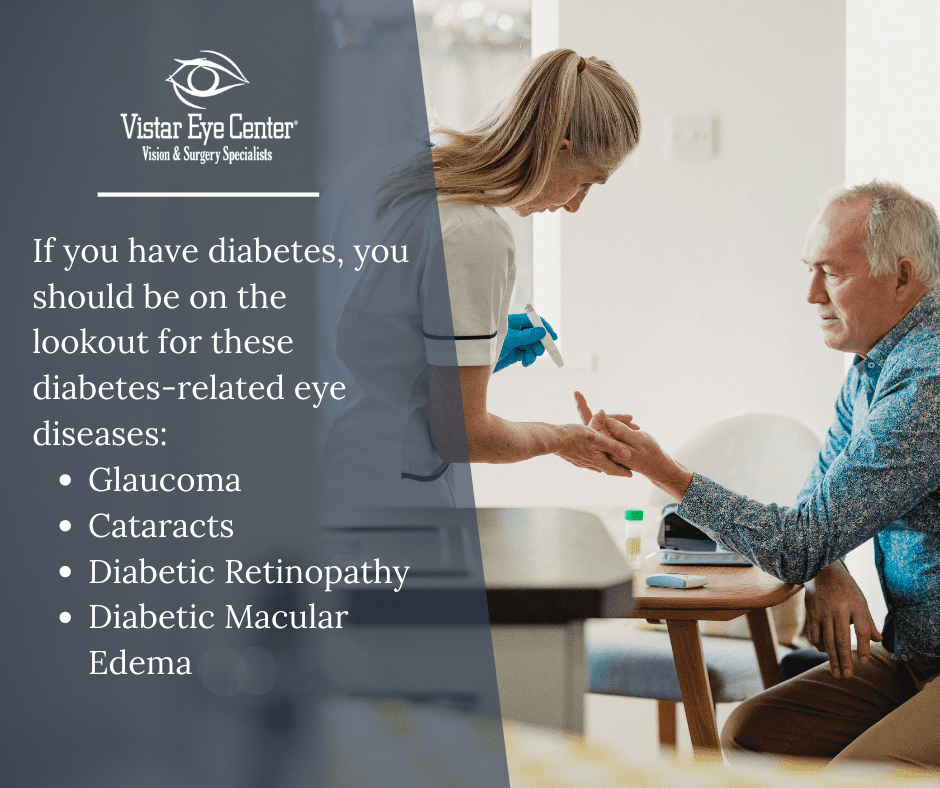
Those who live with diabetes know that there’s no end to the damage it can do to your health if left unchecked. Even so, many of our patients are surprised to learn that their eyes are no exception. Today, we examine four of the main eye diseases caused by diabetes; many of their symptoms are ones you’d be able to notice yourself.
Glaucoma
Having diabetes nearly doubles your chances of glaucoma, a disease that affects your vision through increased pressure within the eye.1 Diabetes stiffens the thin, delicate blood vessels serving your iris. This can harmfully increase the interior pressure of the eye by blocking the proper drainage of your eye’s internal fluid.
For some, only a relatively mild form of glaucoma arises, called “primary open-angle glaucoma.” This happens slowly and is usually painless and treatable with proper care.
But patients with diabetes are 37% more susceptible2 to a more severe form of glaucoma called “narrow-angle glaucoma.” This blockage is sudden and has the potential to cause permanent blindness. At its onset, patients may notice sudden nausea, pain in the eye, or distortion of vision, and should visit an eye doctor as soon as possible.
In both situations, regular visits to a doctor can identify the precursors to these symptoms. Our doctors will help you take preventative measures long before the vision-threatening event can occur.
Cataracts
Perhaps the best-known eye condition, cataracts are simply the clouding of your eyes’ lens. They occur usually due to aging and genetics, but excess blood sugar in your eyes can spur them on, too — patients with diabetes are estimated to be five times more likely to have cataracts than non-diabetic patients.3 While cataracts cannot be reversed, they can be treated through surgery.
Diabetic Retinopathy
We’ve talked a lot about the front of the eye, but diabetes can also harm the rear wall of the eye, known as the retina. The retina has quite delicate blood vessels that are quite susceptible to the effects of diabetes. When these blood vessels swell, sag, or collapse entirely and force the growth of new vessels or scar tissue, they can cause direct distortions in your vision.4 Any kind of diabetes can cause diabetic retinopathy — including type 1, type 2, and gestational diabetes (diabetes developed during pregnancy).
Your risk for diabetic retinopathy will increase the longer you have diabetes — and over 40% of diabetic Americans have some stage of diabetic retinopathy.5 The good news: proper management of your diabetes has a direct, positive effect on maintaining your retinal health.
Diabetic Macular Edema
Diabetic macular edema is a particular kind of retinopathy in which the blood vessels, often newer ones, are too thin to properly limit the exchange of fluids between your blood system and the eye’s aqueous humor. The result is a drastic distortion of vision and swelling. While early-stage diabetic retinopathy can go untreated, macular edema must be treated right away to avoid long-term damage.
Fortunately, there are a variety of treatment options that can repair the blood vessels and scar tissue and will have you returning to normal activities in as little as a day or two.
An Ounce of Prevention…
Personal health is made up of nearly hundreds of components, all influencing one another — your vision is no different. If you’re worried about your diabetes affecting your eyesight, the first step is to consult your doctor about how to better regulate your blood sugar levels.
But even with the best health regimens, scheduling a checkup is the easiest investment in the prevention of pain and permanent damage. With over seven offices in the Roanoke area and additional offices in Wytheville, Blacksburg, and Westlake Corner, Vistar Eye Center’s doctors are accessible and eager to ensure that you always see life’s unique moments. Schedule an appointment at a convenient location today.