
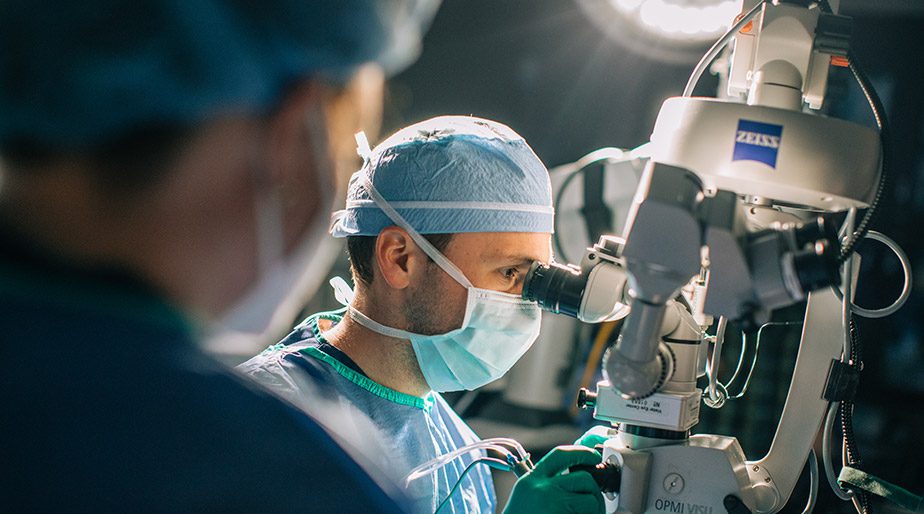
Answers to Common Questions About Cataract Surgery
Dr. Will Griffeth offers expert guidance and answers some of the most common questions about cataract surgery.
Choose a Question to Explore
- Why Your Second Cataract Surgery Might Be Different
- Will You Still Need Glasses After Cataract Surgery?
- Want the Best Distance Vision After Cataract Surgery?
- What Is Monovision?
- Are Multifocal Intraocular Lens Implants Right for You?
- How to Minimize Glasses After Cataract Surgery
- Why You Need an IV for Cataract or EVO ICL Surgery
- What High Myopia Patients Often Misunderstand About Cataract Surgery
- Why You’ve Never Heard You Have Astigmatism—Until Cataract Surgery
- What Is Astigmatism and Why It Matters for Cataract Surgery
- Are Artificial Tears Safe After Cataract Surgery?
- Why You May See a Shadow After Cataract Surgery
- Can Your Lens Implant Fall Out After Cataract Surgery?
- Managing Vision Between First and Second Cataract Surgery
- Will My Postoperative Eyedrops Last for Both Cataract Surgeries?
- Can You Bend Over After Cataract Surgery?
Why Your Second Cataract Surgery Might Be Different
Wondering why your second cataract surgery isn’t exactly like the first? In this video, Dr. Will Griffeth, cataract surgeon, does a deep dive into the key reasons why your experience may vary between your first and second cataract procedures. Get the expert insights you need to feel informed and confident.
Will You Still Need Glasses After Cataract Surgery?
Can cataract surgery really eliminate the need for glasses? In this video, Dr. Will Griffeth of Vistar Eye Center answers one of the most common questions patients ask: “Can you guarantee I won’t need glasses after cataract surgery?”
Learn the truth about vision expectations, lens options, and what factors affect your chances of being glasses-free after surgery. Get trusted insights from a leading cataract surgeon to help you make an informed decision.
Want the Best Distance Vision After Cataract Surgery?
Don’t mind wearing reading glasses but want the clearest possible distance vision after cataract surgery? In this video, Dr. Will Griffeth of Vistar Eye Center in Southwest Virginia explains the best lens implant options to help you achieve sharp, high-quality distance vision.
Discover how your eyes’ astigmatism and lens choices all play a role in getting the visual results you want—without sacrificing clarity at a distance.
What Is Monovision?
Heard about monovision but not sure what it means for your cataract surgery? In this Q&A video, Dr. Will Griffeth of Vistar Eye Center in Southwest Virginia breaks down monovision.
Learn how monovision works, who it’s right for, and what you should consider when choosing the best vision correction option for your lifestyle.
Are Multifocal Intraocular Lens Implants Right for You?
Multifocal intraocular lenses (IOLs) can reduce your need for glasses after cataract surgery—but they’re not right for everyone. In this video, Dr. Will Griffeth of Vistar Eye Center in Southwest Virginia explains why some patients may not be ideal candidates for multifocal lens implants.
Learn about the key factors that determine candidacy, potential side effects, and what alternatives may be better suited for your vision goals.
How to Minimize Glasses After Cataract Surgery
Hoping to wear glasses as little as possible after cataract surgery? In this video, Dr. Will Griffeth of Vistar Eye Center in Southwest Virginia explains two of the most effective options: monovision with Light Adjustable Lenses (LAL) or multifocal intraocular lenses.
Learn how each approach works, who they’re best suited for, and what to expect in terms of visual freedom. Whether you’re aiming to reduce your need for readers or distance glasses—or both—Dr. Griffeth breaks down the pros, cons, and key considerations to help you choose the best path for your lifestyle and vision goals.
Why You Need an IV for Cataract or EVO ICL Surgery
Curious why an IV is needed for cataract surgery or EVO ICL procedures? In this Q&A segment, Dr. Will Griffeth of Vistar Eye Center in Southwest Virginia explains the important role an IV plays in ensuring your comfort and safety during eye surgery.
Whether you’re preparing for cataract surgery or considering EVO ICL as a vision correction option, this video will help you feel more informed and at ease.
What High Myopia Patients Often Misunderstand About Cataract Surgery
Do you have strong nearsightedness (high myopia) and need cataract surgery? You’re not alone—and many patients with high myopia share common misconceptions about what cataract surgery can and can’t do for their vision.
In this video, Dr. Will Griffeth of Vistar Eye Center in Southwest Virginia breaks down the most frequent misunderstandings to help you make informed decisions and achieve the best possible outcome.
Why You’ve Never Heard You Have Astigmatism—Until Cataract Surgery
Have you been told you need an astigmatism-correcting lens implant during cataract surgery—but you’ve never heard that you have astigmatism before? You’re not alone, and your question is a common and important one.
In this video, Dr. Will Griffeth of Vistar Eye Center in Southwest Virginia explains why astigmatism isn’t mentioned until cataract surgery and why correcting it at the time of surgery can significantly improve your vision outcomes.
Learn what astigmatism really is, how it impacts vision after cataract surgery, and why addressing it with a toric lens implant can help reduce your dependence on glasses for distance vision.
What Is Astigmatism and Why It Matters for Cataract Surgery
Wondering what astigmatism really is—and why it suddenly matters now that you’re having cataract surgery? You’re not alone. Many patients are surprised to learn that this common condition can affect your visual results after surgery.
In this video, Dr. Will Griffeth of Vistar Eye Center in Southwest Virginia explains astigmatism in simple terms and why correcting it during cataract surgery can lead to clearer, more consistent vision—especially at a distance.
Are Artificial Tears Safe After Cataract Surgery?
Experiencing dry eyes after cataract surgery? Wondering if it’s safe to use artificial tears? In this video, Dr. Will Griffeth of Vistar Eye Center in Southwest Virginia explains when and how you can safely use artificial tears following cataract surgery.
Learn how artificial tears can support your healing, improve comfort, and even help with visual clarity during recovery.
Why You May See a Shadow After Cataract Surgery
Noticing a shadow or sparkle at the edge of your vision after cataract surgery? You’re not imagining it—and you’re not alone. In this video, Dr. Will Griffeth of Vistar Eye Center in Southwest Virginia explains what this phenomenon is, why it happens, and what you can expect going forward.
Can Your Lens Implant Fall Out After Cataract Surgery?
Worried that your lens implant could fall out after cataract surgery? You’re not alone—this is one of the most common concerns patients have after the procedure.
In this video, Dr. Will Griffeth of Vistar Eye Center in Southwest Virginia explains how lens implants are securely placed during cataract surgery, why they almost never move or dislocate, and the rare situations when complications might occur.
Managing Vision Between First and Second Cataract Surgery
Struggling with blurry or imbalanced vision between your two eyes after your first cataract surgery? It’s a common and temporary challenge for many patients waiting for their second eye to be treated.
In this video, Dr. Will Griffeth of Vistar Eye Center in Southwest Virginia explains why this visual imbalance happens, what to expect during this in-between period, and how to manage it comfortably.
Learn about common solutions—including temporary glasses adjustments, or contact lenses to help you function more easily while your eyes are in different states.
Will My Postoperative Eyedrops Last for Both Cataract Surgeries?
Worried about whether your postoperative eyedrops will last through both cataract surgeries? You’re not the only one—many patients wonder if they’ll need a second set of drops or if their current bottles will be enough.
In this video, Dr. Will Griffeth of Vistar Eye Center in Southwest Virginia explains how eyedrops are typically prescribed after cataract surgery, how long they usually last, and whether you’ll need refills for your second eye.
Can You Bend Over After Cataract Surgery?
Is it really unsafe to bend over after cataract surgery? In this video, Dr. Will Griffeth of Vistar Eye Center in Southwest Virginia clears up the confusion around bending and physical activity during cataract surgery recovery.
He explains that light bending for simple tasks—like tying your shoes—is usually fine. What you should avoid is bending or lifting in a way that causes straining or pressure, which can affect your eye as it heals.